Buying or selling an acreage that is not on city sewer can feel like a guessing game. You might hear terms like Title 124, lagoons, permits, and O&M, then wonder what actually applies to your property. If you get the details wrong, a closing can be delayed or a deal can fall apart.
You do not have to become a wastewater expert to protect your interests. You just need to know the basics, ask for the right records, and bring in qualified pros at the right time. This guide walks you through septic and lagoon compliance for acreages in Lancaster County, with clear steps for buyers and sellers and a quick checklist of what to request. Let’s dive in.
Title 124 basics in Lancaster County
Nebraska’s statewide rules for onsite wastewater systems are set by Title 124. The Nebraska Department of Environment and Energy (NDEE) administers Title 124 and provides guidance, certifications, and standards for septic tanks, soil absorption systems, lagoons, and approved alternatives.
Counties carry out local permitting and inspections. In Lincoln and greater Lancaster County, the local environmental and health authorities implement Title 124, issue permits to construct, perform final inspections, and maintain permit records. County procedures may add steps or forms, so you should confirm local practices when you start a project or a transaction.
Why this matters in a sale: compliance can affect timelines and negotiations. Missing permits or as-built records, or signs of a failing system, can trigger repairs, replacement, or escrow. Getting ahead of the paperwork helps you avoid surprises.
Common systems on acreages
Conventional gravity septic
This is the most common setup: a septic tank followed by a soil absorption area (drainfield). You should expect a construction permit, final inspection or certificate of completion, and an as-built drawing showing locations and depths. A regular pumping schedule is recommended for long-term performance.
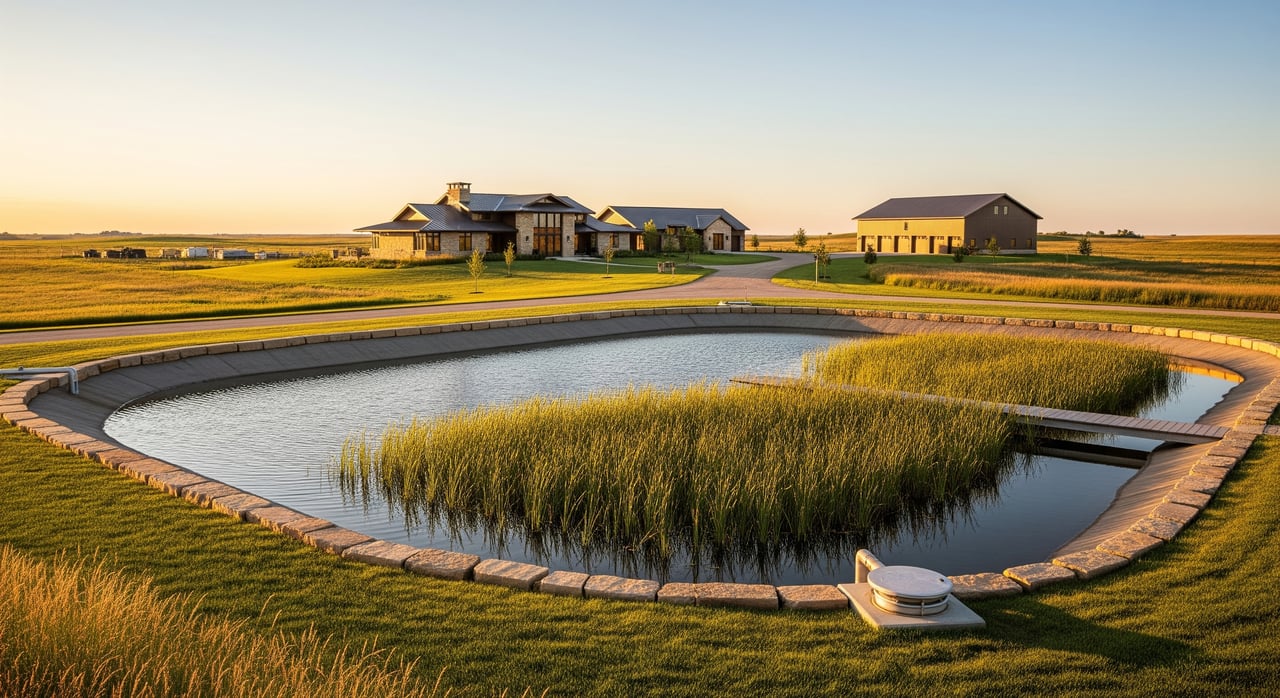
Lagoons (waste stabilization ponds)
Lagoons are used on some acreages where soils or site conditions limit conventional drainfields. Compliance focuses on proper siting and setbacks, berm integrity and freeboard, stable slopes, and inlet-outlet controls that prevent overflow and protect groundwater. Larger or modified lagoons often require engineered plans and may receive additional oversight. Lagoons are designed to retain and treat wastewater on site and typically do not discharge to surface water unless separately permitted.
Alternative or advanced systems
Systems like aerobic treatment units, mounds, sand filters, or recirculating media can serve sites with marginal soils, high water tables, or tight setbacks. These often require manufacturer or engineer specifications plus a service agreement. Title 124 typically calls for an operation and maintenance plan and proof that service is ongoing.
Holding tanks
Holding tanks are uncommon and generally used only when no dispersal option exists or as a temporary measure. They require strict permitting and routine pumping by a registered hauler, with proper disposal records.
Who can work on septic and lagoons
Designers and engineers
Complex or nonstandard systems need qualified design. Title 124 requires appropriately credentialed professionals, such as a Nebraska professional engineer or a state-recognized septic designer, when site conditions or system type go beyond prescriptive standards.
Installers and contractors
Installation must match the permitted design. Many counties require installer identification on applications and as-built submittals, and some maintain lists of known installers. Verify that your installer is familiar with Title 124 and local conditions of approval.
Maintenance and service providers
Alternative treatment units and some advanced systems must be serviced by certified maintenance providers. These providers should maintain logs, follow the O&M manual, and supply reports if the county requires them.
Septic pumpers and waste haulers
Tanks and holding tanks must be pumped by licensed or registered septage haulers. Proper disposal to a permitted facility and documentation are standard expectations. Ask for receipts and disposal manifests.
Inspectors
County environmental health staff conduct final construction inspections for permit closure. For real estate transactions, you can hire a private inspector experienced with local Title 124 practices. Only the county’s approval resolves permit compliance, so confirm what the county will accept.
Tip for consumers: ask for professional licenses, NDEE or county registrations, and proof of insurance as part of your due diligence.
Paperwork to request and review
Here are the records you should expect to see or request during a purchase or sale:
- Permit to Construct or Permit to Install for the system
- Final Inspection document or Certificate of Completion/Compliance
- As-built drawing or site plan showing tank, drainfield, depths, and setbacks
- O&M manual and service logs for alternative or advanced systems
- Current service contracts and maintenance records, including alarm events and repairs
- Pumping receipts or manifests documenting proper disposal
- Design documents and engineering plans, especially for lagoons or engineered systems
- Any recorded easements or deed restrictions affecting system location or replacement area
- Transfer or change-of-ownership paperwork if the county requires it
Sellers should gather these early. Buyers should include a septic contingency and request copies of the permit file from the county.
Red flags that can slow a closing
Watch for warning signs during showings and inspections:
- Persistent soggy soil near the drainfield, unusual lush growth, sewage odors, or slow drains
- Evidence of recent unpermitted work or no as-built record on file
- Lagoons with low freeboard, eroding berms, strong odors, or unclear setbacks to wells or streams
- Alternative systems with no active service contract or no recent maintenance logs
- Encroachments over septic components or drainfields, or missing easements for access
If you spot any of these, plan for a deeper evaluation and be ready to negotiate repairs or escrow.
Steps for buyers
- Request the county permit file as soon as you are serious about a property.
- Ask the seller for all service records, pumping receipts, and any O&M contracts.
- Order a professional septic inspection that includes tank evaluation and, when useful, dye testing or a camera review of lines.
- For lagoons, consider an assessment by a qualified engineer or consult the county sanitarian.
- Verify the status and transferability of any required O&M contracts for alternative systems.
- Confirm that any pumper used is state-registered and provides disposal manifests.
- If issues are found, obtain written repair estimates from qualified installers and confirm permit timelines with the county.
Steps for sellers
- Pull your permit history and locate your as-built drawing.
- Gather pumping receipts, maintenance logs, and any lagoon work records such as dredging or berm repairs.
- If you have an alternative system, confirm your service contract is current and transferable.
- Consider a pre-listing septic inspection to identify concerns before buyers do.
- Budget time for permits if repairs or upgrades are recommended.
Costs and timing
Costs vary widely by system type, site conditions, and the local contractor market. Simple fixes like pumping and minor distribution repairs may be modest. Replacements, alternative treatment upgrades, or engineered lagoon improvements can be significant. Get multiple estimates and coordinate early with the county on permitting and inspection timelines.
How to confirm local compliance
- Contact the Lancaster County environmental or health office that manages onsite wastewater permitting to request the property’s permit records. Ask for any final inspection documents and as-builts.
- Confirm whether any point-of-sale inspection or certificate is required. Practices can vary by jurisdiction, so verify current county policy.
- For complex or alternative systems, request copies of O&M plans and confirm that maintenance reporting meets Title 124 and county expectations.
Real estate quick checklist
Use this list to stay organized during your transaction:
- County permit file and final approval document
- As-built drawing with locations, depths, and setbacks
- Pumping receipts and disposal manifests
- Service contracts and maintenance logs (for alternative systems)
- Lagoon engineering plans and any berm or sludge management records
- Inspection report from a qualified professional
- Written repair estimates, if needed
- Confirmation of permit steps and timing for any required work
Who enforces what
- Title 124 sets statewide minimum standards for design, installation, operation, and maintenance.
- NDEE is the state authority for Title 124 guidance and credentials.
- Lancaster County environmental and health officials implement and enforce the rules locally, issue permits, and maintain records.
Putting it all together
If you know the rules of the road, septic and lagoon systems do not have to complicate your move. Title 124 sets the statewide framework, Lancaster County carries it out locally, and the right paperwork and inspections keep your transaction on track. Start early, verify records, and use qualified professionals so you can close with confidence.
Ready to talk through next steps for your acreage sale or purchase? Schedule a free consultation with Nancy Faulhaber at Coldwell Banker Preferred Group for practical, local guidance tailored to your timeline and goals.
FAQs
Are septic inspections required at closing in Lancaster County?
- Requirements can vary by jurisdiction. Confirm Lancaster County’s current policy with the local environmental health office and include a septic contingency if you want formal assurance.
Who is allowed to pump or repair septic and lagoon systems in Nebraska?
- Pumping must be performed by licensed or state-registered septage haulers, and complex repairs often require qualified designers, engineers, and permitted installers. Verify credentials with the county and NDEE.
What documents should a seller provide for a septic or lagoon?
- Construction permit, final inspection or compliance certificate, as-built, O&M manual if applicable, maintenance logs, pumping receipts, and any engineering plans or recorded easements.
Which agencies oversee Title 124 and local enforcement?
- NDEE administers Title 124 statewide. Lancaster County environmental and health departments issue local permits, conduct inspections, and maintain records.
Are lagoons allowed near wells or streams in Lancaster County?
- Setbacks and site-specific limits apply under Title 124 and local rules. Lagoon siting often requires an engineered design and a county review to confirm protective distances.